.png)
.png)
%20-%20Copy.png)
.png)
.png)

Engineering Analysis Services in Saudi Arabia
ASPAR Engineering provides engineering analysis services in Saudi Arabia to evaluate performance, enhance safety, support design validation, and guide informed engineering decisions across complex building, infrastructure, and mechanical systems.
What We Analyze
Integrated Simulation & Engineering Analysis Services
Combining advanced modelling, simulation, and technical assessment methods to evaluate performance, safety, reliability, environmental impact, and design efficiency.

Evacuation & Crowd Modelling
Simulate occupant and crowd movement under normal and emergency conditions to evaluate flow efficiency, congestion, exit capacity, and evacuation performance.
This analysis supports safer building design, emergency planning, and crowd management decisions.

Hydrology Studies
Hydrology studies use modelling tools, GIS techniques, and field data to assess water flow, flood risk, recharge potential, drainage behavior, and overall water balance.
These studies support better infrastructure planning, environmental assessment, and water management decisions.
.png)
Acoustic Analysis
Acoustic analysis evaluates noise generation, sound propagation, vibration impact, and acoustic performance across buildings, systems, and surrounding environments.
The results help support compliance, occupant comfort, and better acoustic design decisions.

Fire Load Analysis
Fire load analysis calculates the combustible load within spaces to estimate potential fire energy and support fire safety design.
The analysis helps guide mitigation strategies, fire protection planning, and safer building operation.
.png)
Pipe Stress Analysis
Pipe stress analysis evaluates piping systems under pressure, temperature, stress, support loads, and thermal expansion conditions.
The analysis supports system integrity, safety, reliability, and compliance with project engineering requirements.
.png)
Energy Analysis
Energy analysis evaluates facility energy consumption, system performance, and operational efficiency to identify energy saving opportunities.
The results support better energy management, lower waste, and improved operational performance.
.png)
Finite Element Analysis (FEA)
Finite Element Analysis simulates mechanical behavior under loads, stress, deformation, vibration, and thermal effects.
FEA supports safer component design, reliability assessment, performance validation, and optimized engineering decisions.
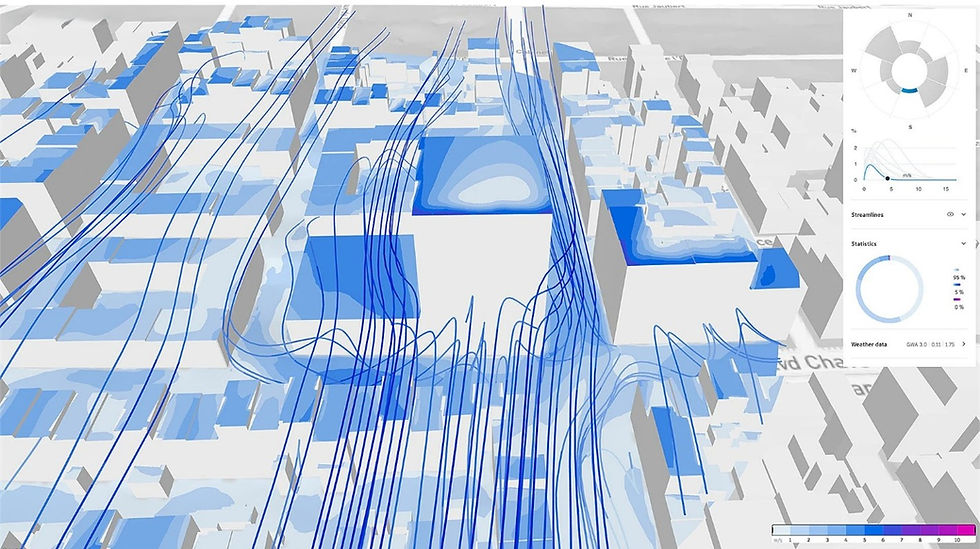
Wind Analysis
Wind analysis evaluates wind effects, airflow patterns, pressure distribution, pedestrian comfort, and environmental conditions around buildings and infrastructure.
The analysis supports safer, more efficient, and more resilient design solutions.