Magnetic Bearing Chiller BOQ Specification Template: Engineer’s Procurement Guide
A performance-based BOQ and technical specification framework for oil-free centrifugal chillers
Quick answer A good magnetic-bearing chiller BOQ specification should not begin with a brand name or a copied model description. It should define the project duty, rating conditions, minimum full-load and part-load performance, oil-free magnetic-bearing compressor requirement, refrigerant and safety basis, heat-exchanger data, controls, sound limits, electrical requirements, testing, submittals, commissioning, and clear inclusions/exclusions. The copy-ready template in this article is intentionally performance-based so consultants can adapt it to water-cooled or air-cooled projects without inventing manufacturer-specific values. |
Engineers searching for a “magnetic bearing chiller BOQ spec template” are usually not looking for a general explanation of chillers. They need wording that can be transferred into a tender, BOQ, equipment schedule, consultant specification, or design package without creating technical ambiguity. The practical challenge is to specify the technology strongly enough to protect the project intent while keeping the document measurable, verifiable, and competitively tenderable.
Magnetic-bearing chillers are typically oil-free centrifugal machines using active magnetic bearings, variable-speed drives and permanent-magnet motors. Danfoss describes its Turbocor range as oil-free centrifugal compressor technology using magnetic bearings and variable-speed operation; Smardt likewise describes its oil-free chillers as using magnetic-bearing centrifugal compressor technology. These technology descriptions are useful, but the BOQ still needs project-specific performance criteria and acceptance requirements rather than generic marketing claims.
What should a magnetic-bearing chiller BOQ actually specify?
The BOQ line item should identify what is being supplied, while the technical specification should define how compliance will be demonstrated. Treat them as two linked documents: the BOQ controls scope and quantity; the specification controls engineering quality, performance and submittals.
Specification block | What to define |
Design duty | Cooling capacity, chilled-water temperatures, flow basis, condenser or ambient conditions, fluid, altitude and fouling basis. |
Energy performance | Minimum full-load efficiency and part-load metric at stated rating conditions; project conditions where NPLV or selected operating points are more representative. |
Compressor technology | Oil-free centrifugal compressor(s) with active magnetic bearings, integral/associated variable-speed control and required redundancy philosophy. |
Heat exchangers | Evaporator/condenser type, design pressure, water-side pressure drop limit, materials, connections, insulation and serviceability. |
Refrigerant and safety | Permitted refrigerant, ASHRAE safety classification, applicable refrigeration safety requirements and project environmental criteria. |
Controls | Local controller, safeties, trending, fault history, BMS protocol, remote enable/setpoint and required points list. |
Electrical | Power supply, MCA/MOCP or equivalent submitted data, harmonic/EMC requirements where applicable, isolators/starters if in scope, and power-quality assumptions. |
Sound and vibration | Project sound-power/sound-pressure limits, measurement standard, vibration isolation scope and any night-time or boundary criteria. |
Testing and certification | AHRI certification/rating basis where applicable, factory testing, witness testing option, field commissioning and acceptance records. |
Documents and handover | Selection sheets, drawings, performance curves, controls data, installation/O&M manuals, certificates, warranty and commissioning records. |
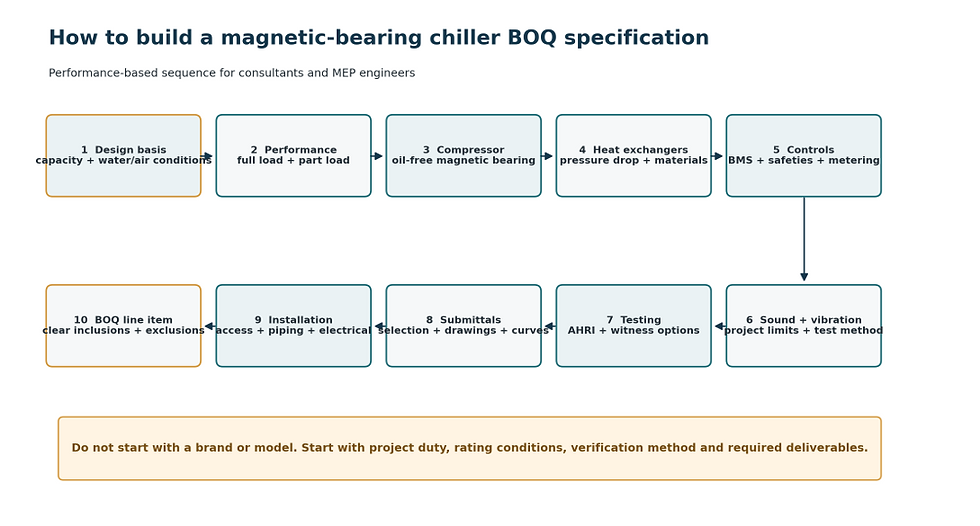
Figure 1. Performance-based sequence for developing the BOQ and technical specification.
Standards and rating references that matter
For vapor-compression water-chilling packages, AHRI 550/590 (I-P) and AHRI 551/591 (SI) define performance-rating requirements for factory-made water-chilling packages. AHRI’s certification programs verify published ratings such as full-load capacity, cooling efficiency, evaporator/condenser water pressure drop and IPLV/NPLV, depending on equipment type and program scope. For a tender specification, state the edition and rating system required by the project rather than writing only “AHRI compliant.”
For water-cooled chiller acoustics, AHRI 1280 establishes methods for determining sound-power ratings. For large air-cooled outdoor refrigerating and air-conditioning equipment, AHRI 370 covers sound performance ratings. Refrigerant designation and safety classification should be aligned with ASHRAE Standard 34, while refrigeration-system safety requirements should be checked against ASHRAE Standard 15 and the project’s adopted local codes.
Do not copy efficiency numbers from a standard or from another project without confirming the chiller type, size category, rating conditions, standard edition and local code basis. A procurement specification should state the project’s required performance and then identify the accepted verification method.
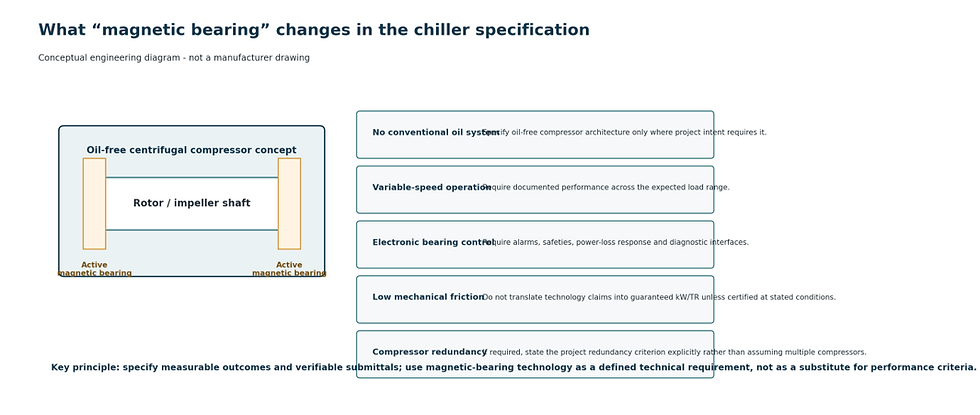
Figure 2. Magnetic-bearing technology changes the compressor and control requirements, but the specification still has to be performance based.
Design information to complete before issuing the BOQ
The template below deliberately contains blanks. Those blanks should be completed from the HVAC design, approved load calculations and project criteria—not from a competitor catalogue.
· Required net cooling capacity at the stated design conditions.
· Chilled-water entering and leaving temperatures and design flow.
· For water-cooled chillers: condenser-water entering/leaving temperatures, design flow and allowable pressure drop.
· For air-cooled chillers: design ambient dry-bulb temperature, project altitude and any required high-ambient derating basis.
· Water quality, glycol concentration if any, evaporator/condenser fouling factors and water-side design pressure.
· Expected annual load profile or critical operating points, particularly where part-load efficiency drives lifecycle cost.
· Electrical supply, frequency, short-circuit level and power-quality requirements.
· Maximum allowable sound criteria and the measurement/reference location.
· Minimum turndown, minimum stable load and project redundancy requirement.
· BMS protocol, points list, metering and trend requirements.
· Refrigerant policy, GWP restrictions and safety classification requirements.
· Plant-room or roof access, lifting, maintenance, tube-pull/service clearances and replacement route.
Copy-ready magnetic bearing chiller BOQ line-item template
Use the following as a starting point. Delete clauses that do not apply and fill every bracketed field before tender issue.
BOQ field | Suggested wording |
Item | High-efficiency oil-free magnetic-bearing centrifugal chiller, complete with compressor(s), evaporator, condenser as applicable, refrigerant circuit, factory controls, variable-speed drive(s), safeties, insulation, factory wiring/piping, and accessories required for a complete operational package. |
Type | [Water-cooled / air-cooled / evaporatively cooled] magnetic-bearing centrifugal chiller. |
Quantity | [___] No. |
Net cooling capacity | Not less than [___] kW / TR at the scheduled design conditions. |
Chilled-water conditions | Entering [___] °C; leaving [___] °C; design flow [___] L/s; fluid [water / ___% glycol]. |
Condenser / ambient basis | Water-cooled: entering condenser water [___] °C, leaving [___] °C, flow [___] L/s. Air-cooled: outdoor design dry-bulb [___] °C at altitude [___] m. |
Minimum efficiency | Full-load efficiency: [___] kW/TR or COP [___]. Part-load requirement: IPLV/NPLV or project operating-point schedule [___], evaluated at stated conditions. |
Compressor | Oil-free, variable-speed centrifugal compressor(s) using active magnetic bearings. Conventional oil-lubrication system not required for compressor bearings. Compressor quantity/redundancy: [___]. |
Refrigerant | [___], safety classification [___]. Refrigerant charge and environmental data to be submitted by bidder. |
Heat exchangers | Factory-assembled heat exchangers suitable for scheduled duty and design pressure, with water-side pressure drop not exceeding [___] kPa at design flow. Materials and connection details as scheduled/project specification. |
Controls and BMS | Microprocessor-based controller with local display, alarms, safeties, capacity control, operating history and BMS interface via [BACnet/IP / BACnet MS/TP / Modbus / other]. Provide points list and integration requirements. |
Sound | Maximum sound performance [___] dB / sound power criterion [___], demonstrated using applicable test/rating method. Any project boundary or plant-room criterion shall take precedence. |
Electrical | [___] V, [___] Ph, [___] Hz. Submit MCA/MOCP or equivalent, full-load input, starting/inrush characteristics, power factor and harmonic data where required. |
Certification / rating | Performance shall be rated/certified in accordance with applicable AHRI 550/590 or 551/591 requirements where within program scope. Provide selection output at scheduled project conditions. |
Accessories | Include [vibration isolators / flow switches / differential pressure sensing / spring isolators / refrigerant isolation valves / heat recovery / rapid restart / harmonic mitigation / other] only where specified. |
Submittals | Manufacturer selection, certified performance, GA drawings, dimensions/weights, nozzle/connection details, water pressure drops, sound data, electrical data, control points, performance curves/maps, installation requirements, O&M documentation and compliance schedule. |
Testing and commissioning | Factory functional testing as standard; project witness test [required / not required]. Provide field start-up, commissioning records, setpoints, alarm verification and operator training as specified. |
Warranty | Minimum [___] months from [shipment / start-up / handover] subject to project conditions. State compressor, parts, labor and refrigerant exclusions separately. |
Unit rate shall include | All factory-supplied components stated above, documentation, factory testing, standard accessories, delivery basis [___], start-up/commissioning [if in scope], and specified training. |
Excluded unless separately scheduled | Primary/secondary pumps, cooling towers, external pipework, external electrical feeders, BMS head-end programming, structural supports, lifting/cranes, water treatment and civil works unless explicitly included. |
Recommended technical specification clauses
1. Compressor and magnetic-bearing requirements
· Compressor shall be centrifugal and oil-free at the compressor-bearing system, using actively controlled magnetic bearings.
· Capacity control shall use variable-speed operation and any additional aerodynamic control required by the offered compressor design.
· Bidder shall state the number of compressors, minimum stable unit load, compressor staging logic and the effect of a single-compressor outage on available chiller capacity.
· Provide protection and control logic for loss of power, bearing-control faults, overtemperature, surge/operating limits and abnormal operating conditions. Describe the shutdown and restart sequence.
· If fast restart is required, define the required restart time and the conditions under which it shall be demonstrated; do not copy a manufacturer-specific value into a generic BOQ.
2. Chiller performance
· Capacity shall be stated as net cooling capacity at the scheduled design conditions.
· Bidder shall submit full-load input power and efficiency together with part-load performance at the requested rating basis.
· Where the plant has a known annual load profile, request performance at the project’s representative load and condenser/ambient conditions in addition to standard IPLV/NPLV metrics.
· Water-side pressure drops shall be stated at the scheduled design flow. Pump energy should be evaluated separately when comparing total plant performance.
· Performance selections shall identify all assumptions: fouling factor, fluid type/concentration, altitude, ambient or condenser-water conditions, evaporator leaving-water temperature and unit configuration.
3. Evaporator and condenser
· Heat exchangers shall be selected for the scheduled duty, design pressure and project water quality.
· Provide connection sizes, locations, allowable nozzle loads if available, water volumes, design and test pressures, minimum/maximum flow limits and pressure drops.
· For shell-and-tube water-cooled equipment, identify tube material, tube thickness, water-box arrangement and service/tube-pull clearance where these are project requirements.
· For air-cooled equipment, define coil construction, corrosion-protection requirement, fan arrangement, service access and high-ambient operating requirement where applicable.
4. Controls, metering and BMS
· Local controls should display operating status, temperatures, pressures where monitored, capacity/load indication, compressor status, alarms and fault history.
· Specify required BMS protocol and minimum points list rather than stating only “BMS compatible.”
· Require remote enable/disable, common alarm, run status, leaving-water temperature, setpoint control and energy/power data where the project control sequence requires them.
· If plant optimization will be used, require the chiller supplier to provide the data points and communication documentation needed by the supervisory controller.
5. Sound, vibration and installation
· Define whether the project criterion is sound power, sound pressure at a stated distance/location, room NC/NR criterion, property-line limit or a combination.
· Water-cooled chiller sound-power data may be specified using AHRI 1280 where applicable; large air-cooled equipment may reference AHRI 370 where applicable.
· Provide vibration-isolation requirements based on project structural/acoustic design; do not assume magnetic bearings eliminate all unit vibration or the need for project-level isolation review.
· GA drawings shall show operating weight, shipping weight, center of gravity if available, service zones, door/panel access, tube-pull or heat-exchanger service clearance, lifting points and connection locations.
6. Electrical and power quality
· Require exact voltage, phase and frequency compatibility with the project electrical system.
· Bidder shall provide input power at design conditions, maximum current data, protection requirements and short-circuit/current-withstand data where applicable.
· Where harmonic limits apply, state the project PCC, limit, test/calculation method and responsibility for filters/reactors. Do not assume a generic VSD harmonic value.
· Clarify whether factory disconnects, isolation transformers, harmonic filters, power-factor correction or control transformers are included.
7. Factory testing and acceptance
A robust specification separates certification from project acceptance. AHRI certification confirms ratings within the relevant certification program; it is not a substitute for every project-specific test. If witness testing is required, define the test points, tolerances, instrumentation, who pays for the test, retest conditions and what happens if the unit does not meet the guaranteed schedule.
· Require certified or independently verifiable performance where available for the offered chiller type.
· For critical projects, consider witness testing at design duty and one or more meaningful part-load points.
· Require a field start-up report, safety and alarm checks, controller setpoint record, sensor verification and BMS point-to-point testing.
· Define acceptance tolerances and whether field water temperatures/flows must be stabilized before performance acceptance.
Tender evaluation matrix: what to compare between bidders
Evaluation criterion | How to evaluate | Evidence |
Net capacity at project duty | Pass/fail + margin | Selection output at scheduled conditions |
Full-load input / efficiency | Lowest compliant, not isolated from duty | Certified/selection data |
Part-load performance | Compare at common conditions | IPLV/NPLV plus project points |
Evaporator pressure drop | Lower within selection limits | Selection sheet |
Condenser pressure drop | Water-cooled only | Selection sheet |
Minimum stable load | Important for low-load operation | Manufacturer operating data |
Compressor redundancy | Compare available capacity after one compressor is unavailable | Compressor schedule/staging data |
Refrigerant | Check project environmental/safety policy | Data sheet + ASHRAE classification |
Sound | Compare on common rating basis | Certified/tested sound data |
Electrical input/current | Check feeder and generator implications | Electrical schedule |
Controls/BMS | Check protocol and points list | Controls submittal |
Dimensions/weight | Check plant-room/roof and replacement route | GA drawing |
Warranty/service | Compare scope, term and exclusions | Commercial submission |
Lifecycle cost | Use common load profile and energy tariff assumptions | Transparent calculation |
KSA project considerations
For Saudi Arabia, avoid turning the BOQ into a generic “high ambient” statement. Air-cooled units should be selected at the actual project summer design condition and altitude, and the bidder should submit performance at that condition. Water-cooled plants should use the project’s cooling-tower design temperatures and water-treatment basis. AHRI 551/591 now includes SI rating resources and high-ambient IPLV appendices for relevant climate zones, but the consultant should still define the project duty explicitly rather than relying on a climate label alone.
Electrical supply, harmonic limits, acoustic constraints, condenser-water quality, corrosion exposure, outdoor installation requirements and local authority requirements should be project-specific. If the chiller serves a hospital, data center, industrial process or other mission-critical facility, redundancy and restart requirements should be written as measurable system requirements.
Common BOQ mistakes to avoid
· Writing “magnetic chiller, complete” with no design conditions or efficiency requirement.
· Copying a manufacturer model number into the BOQ before the project duty and tender strategy are finalized.
· Using only nominal tons/kW and ignoring entering/leaving water temperatures, ambient/condenser conditions and fouling assumptions.
· Comparing kW/TR figures taken at different conditions.
· Requiring “AHRI certification” without stating the applicable chiller type, standard or project rating conditions.
· Using IPLV as the only lifecycle metric for a process or mission-critical plant whose operating profile is very different from the standard weighting.
· Stating “low noise” without a measurable sound criterion and test basis.
· Stating “BMS compatible” without protocol and points.
· Assuming oil-free compressor bearings remove all maintenance, vibration, acoustic or refrigerant-management requirements from the complete chiller.
· Leaving commissioning, witness testing, training, warranty, lifting or delivery responsibilities undefined.
Where this fits within the chiller design process
The BOQ template is most useful after the project cooling load and system concept are established. For equipment categories and application-based selection, review ASPAR’s chiller solutions. For projects that require coordinated HVAC calculations, specifications and BOQ development, see ASPAR’s MEP engineering design services. Engineers comparing broader HVAC equipment options can also use the ASPAR HVAC products overview.
Frequently asked questions
What is the most important line in a magnetic-bearing chiller BOQ?
The design-duty line. Capacity and efficiency are meaningful only when the chilled-water, condenser/ambient, fluid, altitude and fouling conditions are stated. Without that basis, bidders can submit technically different selections that appear comparable.
Should a BOQ specify “oil-free magnetic-bearing compressor”?
Yes, when oil-free magnetic-bearing centrifugal technology is an intentional project requirement. However, the specification should still define measurable performance, controls, redundancy, sound, testing and submittals.
Which AHRI standard applies to chiller performance?
AHRI 550/590 (I-P) and AHRI 551/591 (SI) cover performance rating of vapor-compression water-chilling and heat-pump water-heating packages within their defined scope. Use the edition and units required by the project.
Should I specify IPLV or NPLV?
Use the metric appropriate to the rating conditions and project. IPLV is based on standard part-load methodology; NPLV is used for non-standard rating conditions. For critical lifecycle decisions, also request performance at the project’s representative operating points.
Can I copy a magnetic-bearing chiller specification from another project?
Use it only as a checklist. Design temperatures, capacity, redundancy, power supply, sound criteria, refrigerant policy, controls, local codes and commissioning requirements should be re-established for the current project.
Do magnetic bearings mean the chiller is maintenance-free?
No. They remove the conventional compressor bearing oil system, but the complete chiller still contains heat exchangers, refrigerant circuits, electrical/electronic components, sensors, controls, valves, fans or condenser-water interfaces depending on chiller type, all of which require appropriate inspection and maintenance.
What submittals should be mandatory?
At minimum: selection sheet, certified performance where applicable, GA drawings, dimensions and weights, connection data, pressure drops, sound data, electrical schedule, control points, refrigerant information, performance curves/maps, installation requirements and O&M documentation.
How should magnetic-bearing chillers be compared during tender?
Normalize every bid to the same project duty and verification basis. Compare net capacity, full-load input, part-load performance, pressure drops, minimum stable load, redundancy, sound, electrical characteristics, controls, dimensions, warranty and lifecycle cost using common assumptions.
Sources and technical references
Conclusion
A strong magnetic-bearing chiller BOQ specification protects the engineering intent without turning the tender into a copied catalogue. Define the duty first, make performance measurable, state the magnetic-bearing technology requirement clearly, normalize bidder data to common conditions, and require enough submittal evidence to verify the selection. The template above can be adapted for water-cooled or air-cooled magnetic-bearing chillers, but every bracketed value must be completed from the actual project design before issue.
Need a Project-Specific Magnetic-Bearing Chiller Solution? ASPAR Engineering Can Help
A BOQ template is a strong starting point, but the correct magnetic-bearing chiller solution still depends on the actual project duty, chilled- and condenser-water conditions or outdoor ambient, part-load profile, electrical supply, acoustic limits, redundancy strategy, controls, access, maintenance requirements, and procurement constraints. ASPAR Engineering can support consultants, contractors, developers, and clients in turning those project inputs into a clear technical selection and procurement basis.
Through ASPAR Engineering’s chiller solutions and MEP engineering design services, the project team can obtain support with application-based chiller selection, HVAC calculations, technical specifications, BOQ development, equipment comparison, and multidisciplinary coordination. This helps the consultant evaluate compliant alternatives on a common engineering basis instead of relying only on nominal tonnage, brand names, or isolated efficiency figures.
Where oil-free magnetic-bearing technology is appropriate, ASPAR Engineering can help define the required duty, performance criteria, controls, sound limits, electrical interfaces, testing requirements, and coordination inputs needed to move from a preliminary concept toward a technically coordinated project solution. Final model-specific capacity, efficiency, dimensions, electrical data, and other manufacturer values should still be verified against the submitted selection and approved project documentation.
For a wider view of available HVAC equipment categories, visit the ASPAR HVAC products overview. To discuss a project-specific chiller, BOQ, or MEP design requirement, contact ASPAR Engineering.
Visit Our Chiller Solutions Page Explore application-based chiller solutions and discuss the technical requirements of your project with ASPAR Engineering. |
Relevant ASPAR pages
· Chiller Solutions - Chiller selection and application-based cooling solutions.
· MEP Engineering Design - HVAC calculations, specifications, BOQ development, and multidisciplinary MEP coordination.
· HVAC Products - Overview of ASPAR HVAC equipment categories.
Comments